
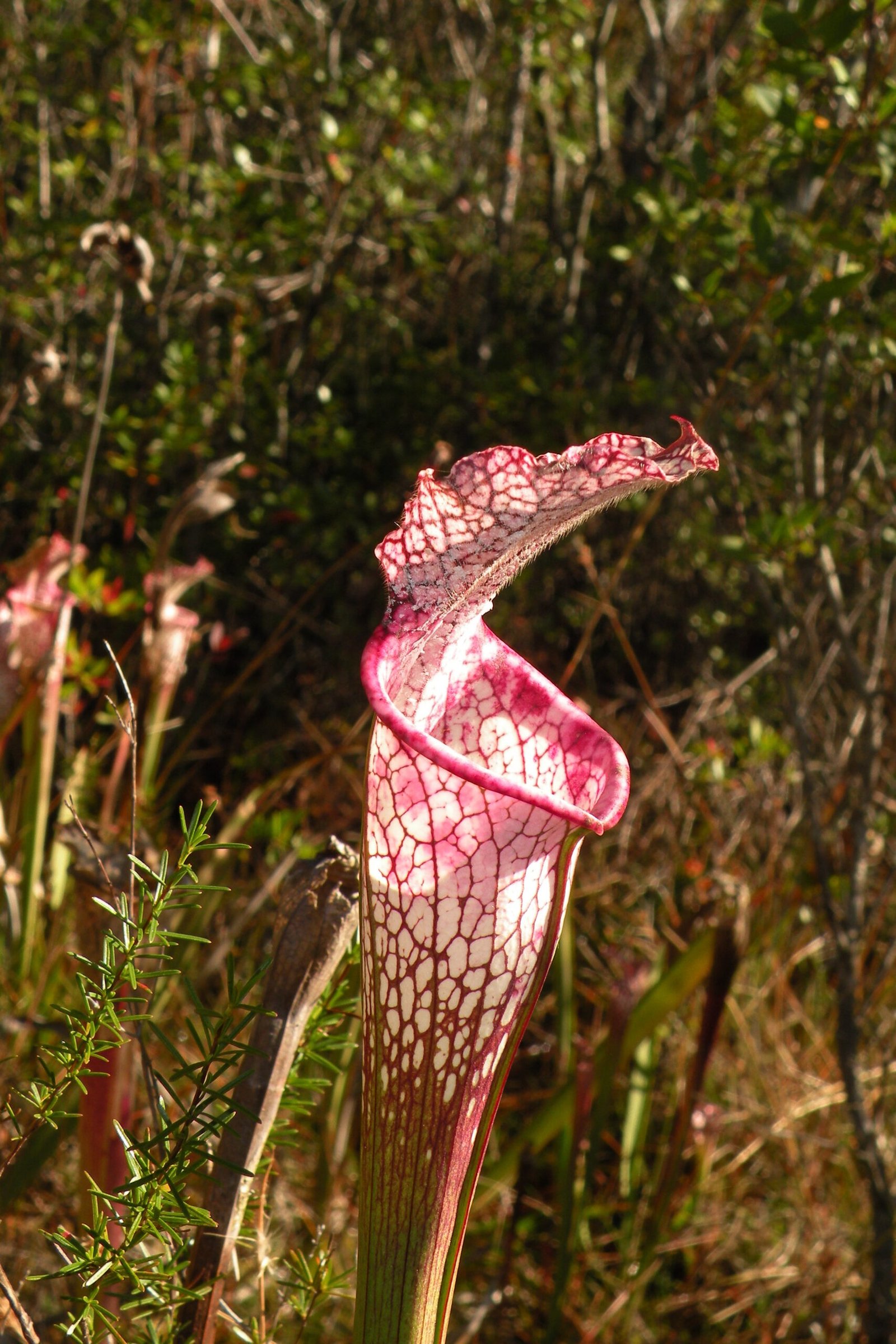
White Top Pitcher
Dionaea, Drosera, Nepenthes, Sarracenia, Pinguicula, Darlingtonia spp.
Carnivorous
Light Details
Give the brightest spot you have. A south or west window with several hours of direct sun is ideal. If moving from lower light, acclimate over 7 to 10 days so foliage does not scorch.
Watering Details
Use only distilled, rain, or reverse-osmosis water. Keep the media moist to wet according to species; never let mineral-heavy tap water build up in the pot. Check the potting mix before watering. In most homes this means watering when the top 1 to 2 inches feel dry, then watering thoroughly until excess drains out. Empty cachepots and saucers so roots are not left sitting in water.
Humidity Details
Aim for 60%+ humidity if possible. A humidifier, cabinet, or grouping with other plants helps more than occasional misting. Keep the plant away from heater vents and cold drafts.
Soil Details
Use a moisture-retentive but airy mix built around coco coir or peat with added perlite. The goal is even moisture without turning dense or muddy.
Temperature
Varies by species, but most need strong light, pure water, and consistently moist media.
Feeding Details
Do not fertilize like regular houseplants; use distilled water and genus-specific care.
Grooming / Training
Remove dead traps or pitchers as they age. Do not force-feed indoor plants unless you know the species' needs.
Repotting
Repot into carnivorous plant media such as long-fiber sphagnum or peat/perlite, never regular fertilized potting soil.
Common Issues
Weak traps or poor color usually mean not enough light. Mineral burn from tap water is a very common cause of decline.
Seasonal Notes
Some species need a cool dormancy, so species ID matters.
What Not To Do
Do not fertilize the soil like a normal houseplant.
Safety Details
Generally Non-Toxic. This entry is marked pet safe in your source file.
Image/source: Photo by Bouke ten Cate via Wikimedia Commons