
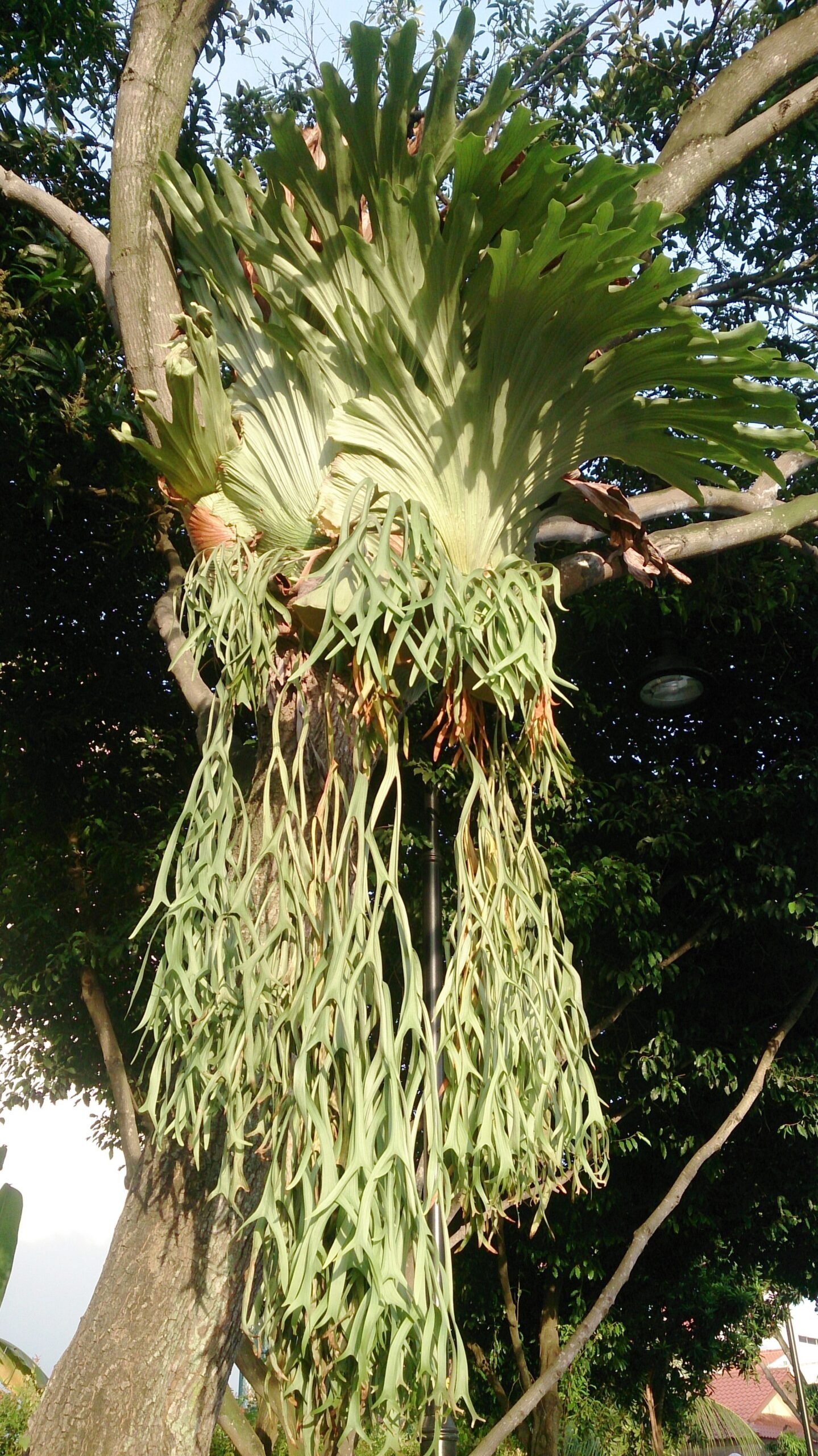
Staghorn
Polypodiopsida
Fern
Light Details
Place in moderate indoor light, such as a bright room set back from the window or near a north/east exposure. It will usually tolerate lower light than many tropicals, but growth slows and color may fade if it is kept too dim.
Watering Details
Keep the mix consistently lightly moist. Ferns struggle if the root ball dries hard, even once. Check the potting mix before watering. In most homes this means watering when the top 1 to 2 inches feel dry, then watering thoroughly until excess drains out. Empty cachepots and saucers so roots are not left sitting in water.
Humidity Details
Aim for 60%+ humidity if possible. A humidifier, cabinet, or grouping with other plants helps more than occasional misting. Keep the plant away from heater vents and cold drafts.
Soil Details
Use a moisture-retentive but airy mix built around coco coir or peat with added perlite. The goal is even moisture without turning dense or muddy.
Temperature
Most indoor ferns prefer 60 to 80°F and no hot dry drafts.
Feeding Details
Feed lightly during active growth and prioritize steady moisture with good airflow.
Grooming / Training
Remove old fronds at the base and increase humidity around the plant rather than relying on misting alone.
Repotting
Repot when crowded, often every 1 to 2 years, and do not let them become rootbound for too long.
Common Issues
Brown crispy fronds usually mean dry air or missed watering. Pale, weak growth may mean too little light.
Seasonal Notes
Winter heat can dry them fast, so monitor moisture closely.
What Not To Do
Do not allow complete dry-out.
Safety Details
Generally Non-Toxic. This entry is marked pet safe in your source file.
Image/source: Photo by Wajira via Wikimedia Commons