
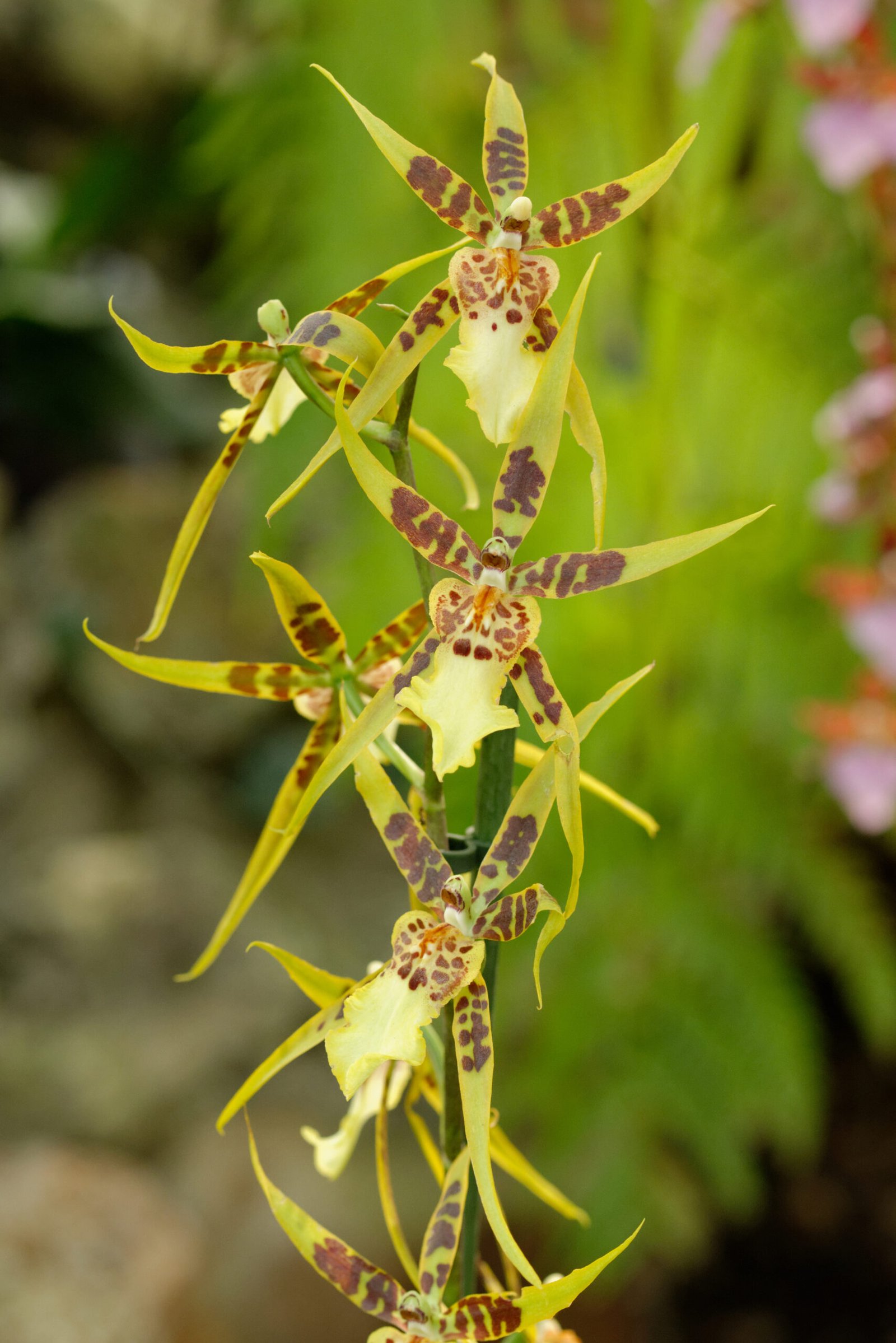
Brassia
Orchidaceae
Orchid
Light Details
Keep in a bright room with lots of ambient light. Best placement is near an east window or a few feet back from a south/west window behind a sheer curtain. Rotate every 1 to 2 weeks for even growth and avoid harsh midday sun unless the plant is known to take more light.
Watering Details
Water when the bark is nearly dry and the roots look silvery rather than green. Soak thoroughly, then drain completely. Let the mix dry farther than a typical tropical houseplant, then water deeply and drain well. In many homes this lands around every 10 to 14 days, but always confirm by touch rather than watering by calendar.
Humidity Details
Aim for 60%+ humidity if possible. A humidifier, cabinet, or grouping with other plants helps more than occasional misting. Keep the plant away from heater vents and cold drafts.
Soil Details
Use a fast-draining mix with lots of mineral grit or perlite. Terracotta pots and drainage holes are helpful because they let the root zone dry quickly.
Temperature
Most common house orchids do well around 65 to 80°F with a mild day/night difference.
Feeding Details
Feed weakly and regularly during active growth and allow airy roots to dry slightly between waterings.
Grooming / Training
After flowering, trim spent spikes according to orchid type. Keep water out of the crown of Phalaenopsis to prevent rot.
Repotting
Repot into fresh orchid bark about every 1 to 2 years, usually after blooming.
Common Issues
Wrinkled leaves or shriveled roots mean dehydration or root loss. Mushy crown or roots mean poor airflow or overwatering.
Seasonal Notes
Feed lightly but regularly while growing, then ease off in lower light months.
What Not To Do
Do not plant standard orchids in dense potting soil.
Safety Details
Pet Friendly. This entry is marked pet safe in your source file.
Image/source: Rhizo Remedy uploaded plant images.