
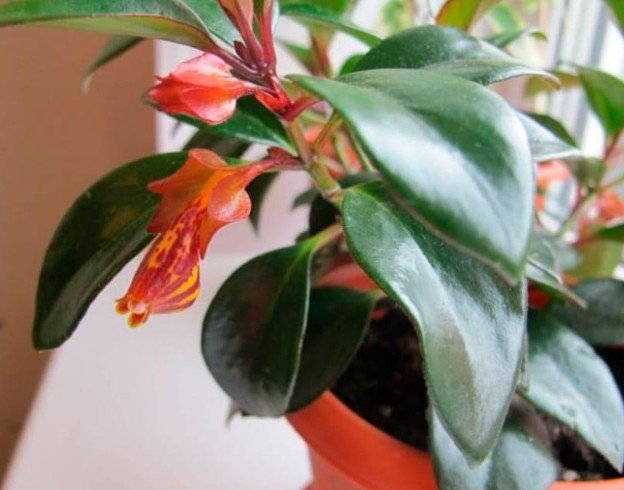
Rio
Nematanthus gregarius
Goldfish Plant
Light Details
Goldfish Plant does best in bright, indirect light. Place near an east window or a few feet back from a south or west window. Too little light usually means fewer blooms and leggy growth. Avoid harsh direct afternoon sun, which can scorch the leaves.
Watering Details
Water when the top inch of soil feels dry. Goldfish Plants like steady moisture, but they do not like sitting wet. Water thoroughly, let excess drain out, and empty saucers or cachepots. Overwatering can cause root rot and leaf drop.
Humidity Details
Average household humidity can work, but Goldfish Plants usually perform better with medium to higher humidity. Keep away from dry heat vents and cold drafts. A humidifier or pebble tray can help if the room is dry.
Soil Details
Use a light, airy potting mix. A good blend would be regular potting mix with added perlite, orchid bark, or coco chips. The goal is moisture retention with fast drainage and airflow around the roots.
Temperature
Keep at 65 to 80°F. Avoid cold drafts and temperatures below about 60°F.
Feeding Details
Feed once a month during active growth in spring and summer using a diluted balanced fertilizer. Reduce or pause feeding in fall and winter when growth slows.
Grooming / Training
Pinch back long stems to encourage fuller growth. Remove faded flowers and yellowing leaves. It can be grown in a hanging basket or allowed to spill over a shelf.
Repotting
Repot every 1 to 2 years, preferably in spring. Goldfish Plants often bloom better when slightly snug in their pot, so avoid moving them into a pot that is too large.
Common Issues
Leggy growth or no flowers usually means not enough light. Leaf drop can come from overwatering, cold drafts, or sudden changes. Crispy edges may mean dry air or inconsistent watering.
Seasonal Notes
Water slightly less in winter, but do not let the plant fully dry out for long periods. Blooming is strongest with bright light, stable warmth, and consistent care.
What Not To Do
Do not let it sit in soggy soil. Do not place it in harsh direct afternoon sun. Do not keep it near cold windows, heat vents, or drafty doors.
Safety Details
Generally considered non-toxic to pets, but still best kept out of reach.
Image/source: Rhizo Remedy uploaded plant images.