
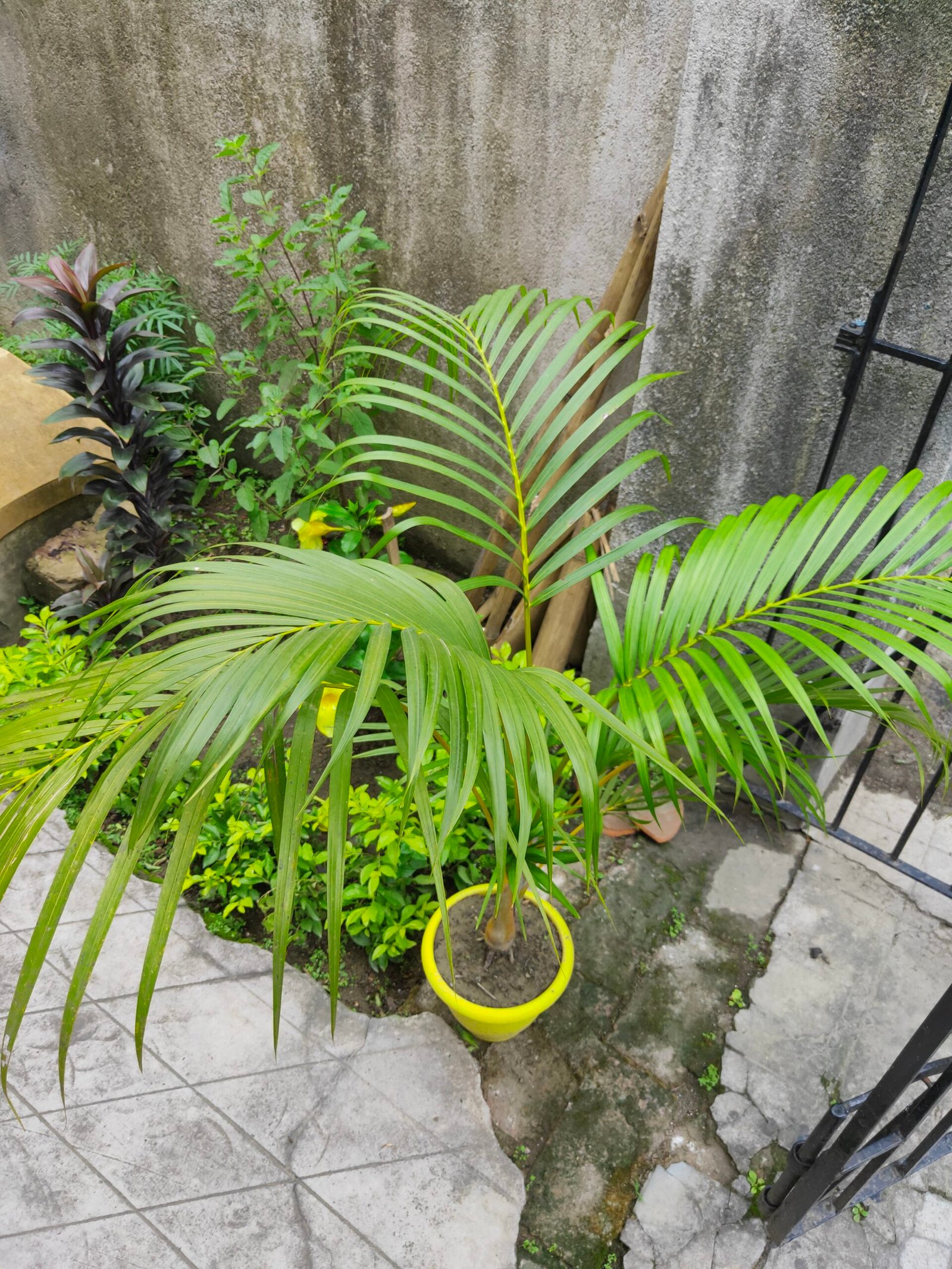
Areca Palm
Arecaceae spp.
Palm
Light Details
Keep in a bright room with lots of ambient light. Best placement is near an east window or a few feet back from a south/west window behind a sheer curtain. Rotate every 1 to 2 weeks for even growth and avoid harsh midday sun unless the plant is known to take more light.
Watering Details
Water when the top 1 to 2 inches dry, keeping the root ball evenly moist but never swampy. Check the potting mix before watering. In most homes this means watering when the top 1 to 2 inches feel dry, then watering thoroughly until excess drains out. Empty cachepots and saucers so roots are not left sitting in water.
Humidity Details
Average household humidity is usually fine, but the plant will appreciate steadier moisture in the air. Keep it away from strong HVAC drafts and use a humidifier if the room stays very dry.
Soil Details
Use a high-quality indoor potting mix with added perlite or bark if you want a bit more airflow. The mix should hold some moisture but still drain freely.
Temperature
Most indoor palms prefer 65 to 85°F and dislike cold drafts.
Feeding Details
Feed monthly during active growth and keep moisture steady but not soggy.
Grooming / Training
Only remove fronds once they are mostly brown; palms pull nutrients from aging foliage.
Repotting
Repot infrequently and gently because many palms dislike root disturbance.
Common Issues
Brown tips are often low humidity, salts, or inconsistent watering. Spider mites are common in dry air.
Seasonal Notes
Use less fertilizer and water in winter, but do not let the root ball dry completely for long.
What Not To Do
Do not cut green fronds just for looks.
Safety Details
Generally Non-Toxic. This entry is marked pet safe in your source file.
Image/source: Rhizo Remedy uploaded plant images.